 EN
EN

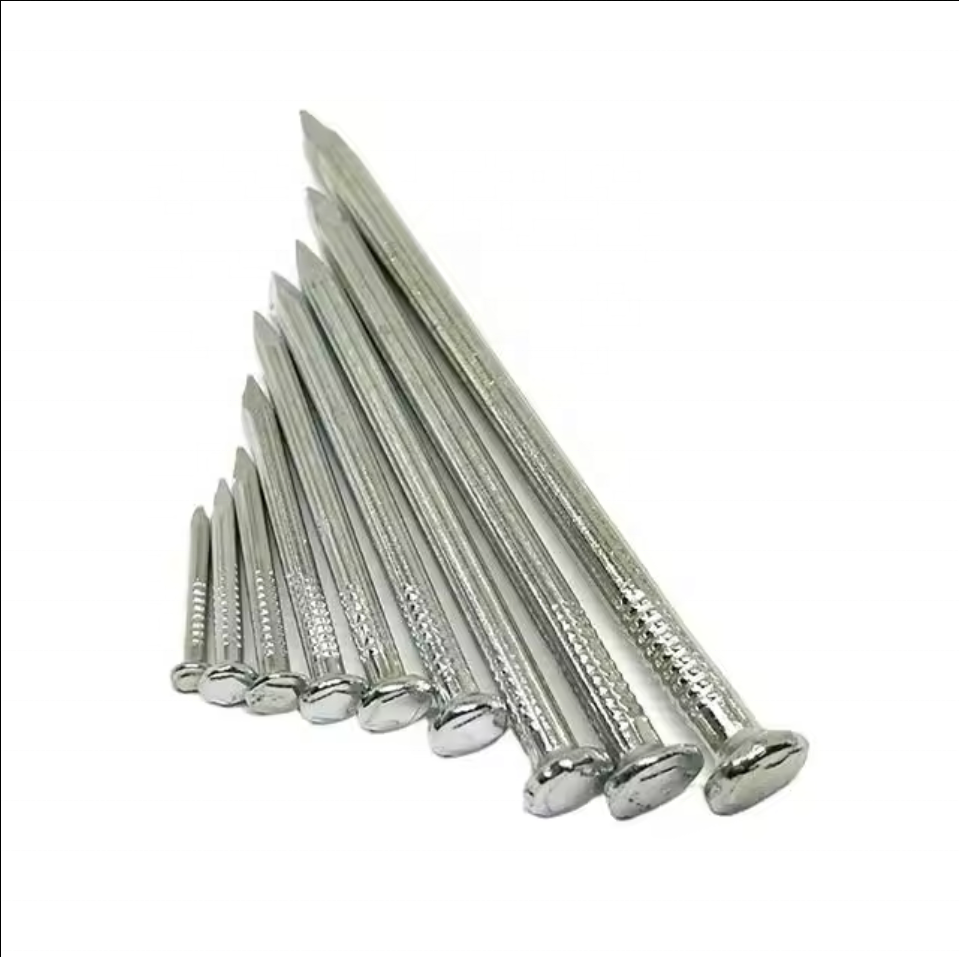
Superior Strength and Load-Bearing Capacity of Steel Nails
Tensile Strength and Ductility: Core Factors in Structural Load Resistance
Steel nails are pretty reliable for holding things together because they have good strength and flexibility. The better quality ones can take about 2,000 pounds per square inch of tension without getting bent out of shape, which makes them three times stronger than those aluminum nails people sometimes try to use instead. What's really nice about steel is how it stretches around 12 to 18 percent before breaking. This means when wood moves naturally over time, the nail bends just enough to stay put without snapping off completely. That kind of give and take is super important in places prone to earthquakes or strong winds, where buildings need to handle all sorts of unpredictable stresses without falling apart at the seams.
Steel Composition and Its Impact on Nail Reliability Under Stress
The performance of steel nails is directly tied to precise metallurgical composition. Carbon content (0.15–0.25%) and manganese additives enhance strength and durability without compromising workability. The following comparison illustrates the mechanical advantages of structural-grade steel:
| Property | Low-Carbon Steel (0.08% C) | Structural-Grade Steel (0.20% C) |
|---|---|---|
| Yield Strength | 250 MPa | 350 MPa |
| Hardness (Brinell) | 120 HB | 160 HB |
| Shear Resistance | 19 kN | 28 kN |
This optimized balance prevents brittle fractures under lateral stress and reduces the risk of damage during installation.
Long-Term Performance: Premium vs. Low-Grade Steel Nails in Load-Bearing Applications
How long steel nails last really sets apart the good ones from the cheap stuff on the market. Tests done by independent labs found that nails meeting ASTM F1667 standards keep about 94% of their hold even after being aged for 50 years in lab conditions. The cheaper alternatives tell a different story though. These lower quality nails can lose as much as 40% of their holding power within just 15 years because tiny cracks start forming over time. What's interesting is that paying a bit extra for better materials only adds around 8% to what something costs. But those few extra bucks mean these nails will last 3 to 4 times longer. That makes all the difference when installing things where failure isn't an option, such as roof trusses or beam hangers where safety matters most.
Durability Under Continuous Structural Stress and Fatigue Conditions
Steel nails demonstrate superior fatigue resistance under repeated loading. Accelerated tests simulating over 50,000 cyclic load cycles confirm their reliability:
| Stress Type | Steel Nail Failure Rate | Composite Nail Failure Rate |
|---|---|---|
| Axial Loading | 0.2% | 4.7% |
| Combined Shear/Tension | 1.1% | 9.8% |
Cold-forged steel’s stable crystalline structure resists work hardening, ensuring consistent performance under prolonged vibrational and dynamic stresses.
Effective Load Distribution in Framed Structures Using Steel Nails
How Steel Nails Enhance Load Transfer and Distribution in Wood Framing
Steel nails work pretty well at moving both vertical and sideways forces through wooden frames because they can deform just enough when needed. At those tricky joint points where all the pressure builds up, steel nails bend a little bit before breaking, which lets them push some of that force over to neighboring parts of the frame instead of snapping right away. Builders have noticed this for years, and recent studies on how wood frames hold up during earthquakes back it up too. The shape of modern nail shafts has gotten better over time as well. Manufacturers now design them so they grab onto wood stronger but don't split the wood apart as much, making overall structures more durable in the long run.
Maintaining Joint Integrity in Load-Bearing Connections
Steel nails of high quality keep their grip on important connections like beams meeting posts and those anchor points in shear walls. These aren't like the brittle alternatives that break down over time. They actually hold up pretty well when subjected to repeated stress, maintaining around 92 to 97 percent of their original tightness even after many years in service according to the NBS Materials Report from 2024. The importance becomes really clear in floor systems. If fasteners start to loosen there, it can throw off how weight gets distributed across the structure, potentially leading to serious problems down the line.
Synergy Between Steel Nails and Modern Wood Framing Systems
Steel nails specially made for engineered wood products such as cross-laminated timber (CLT) and laminated veneer lumber (LVL) really make a difference in construction projects. The electro galvanized coating on these nails stops them from reacting badly with the adhesive layers in the wood. And those special ringed shanks? They actually hold about 40 percent better when pulled out of CLT assemblies than regular smooth shanks according to research published in Timber Engineering Quarterly last year. Contractors working on prefabricated wall panels or building roof trusses find these customized fasteners essential for their work. Without them, achieving that exact fit during assembly would be much harder.
Comparison With Alternative Fasteners in Structural Connectivity
Adhesives and screws have their place in certain situations, but when it comes to getting things done quickly and affordably for large scale construction work, steel nails still come out on top. Research indicates that nails can handle about two to three times more force for the same price compared to those fancy threaded fasteners when attaching brackets to studs. What's really handy about nails is how they bend just enough to let wood expand and contract naturally over time. This means fewer stress points developing in the material, which makes all the difference in places where humidity levels fluctuate throughout the day or season.
Material and Design Innovations That Enhance Steel Nail Performance
Advancements in Steel Alloys and Coatings for Corrosion Resistance
Today's steel nails incorporate special coatings and metal mixtures designed specifically to stand up against tough outdoor conditions. The latest nano-ceramic treatments can last through about 600 hours of salt spray testing, which means they perform roughly three times better than regular zinc coated nails. What makes this possible? These protective layers get applied right during the manufacturing process when the nail shape is formed cold, so the final product maintains its exact measurements needed for proper tool engagement. When working near the ocean or in areas prone to moisture exposure, contractors often turn to duplex stainless steel fasteners instead. These particular nails contain between 18 to 28 percent chromium along with around 3 to 4 percent molybdenum in their composition. This combination creates excellent resistance against the kind of pit corrosion caused by chlorides found in seawater, making them ideal for long lasting installations where rust would be a major problem.
Performance Under Environmental Stress: Humidity, Temperature, and Chemical Exposure
The hybrid epoxy polyester coatings stick around at about 94% adhesion even after going through 10,000 humidity cycles according to ASTM D4585 standards. That kind of durability makes these coatings great choices for places where moisture is always an issue. When it comes to fastening materials in harsh climates, austenitic stainless steel nails handle extreme temps from minus 40 degrees Fahrenheit all the way up to 120 degrees without losing their flexibility. Carbon steel alternatives tend to crack when exposed to freezing conditions though. For industries dealing with corrosive substances, autophoretic deposition tech has been game changing. It forms those self healing polymer layers on surfaces which actively fight back against acidic pollutants as they touch them. The result? Much better protection against chemicals in factories or areas affected by pollution.
Impact of Shank Geometry and Tip Design on Installation and Holding Power
Innovations in nail geometry significantly improve both installation efficiency and holding strength:
| Design Feature | Benefit | Pull-Out Resistance Gain |
|---|---|---|
| Helical Grooves | Reduces wood fiber displacement | 22% (AWPA E1-22) |
| Chisel Tips | Lowers required driving force | 17% |
| Tapered Shank Profiles | Minimizes material stress concentrations | 31% |
These advancements enable code-compliant connections using 34% fewer fasteners in seismic zones, reducing material use and labor costs.
Ringed and Spiral Shank Nails: Maximizing Grip in Critical Connections
The spiral shank design on nails actually boosts their resistance against being pulled out by around 210 Newtons per centimeter compared to regular smooth shanked nails, according to some tests done at the University of Toronto back in 2023. When it comes to working with wood, those special nails have a 45 degree twist pattern that grabs onto the wood fibers just right without splitting them apart, which makes them really good for those engineered I-joist applications. There's also another type called ringed nails that have these tiny ridges running around them about half a millimeter deep or so. These little grooves bite into composite materials pretty well, giving them shear strengths of up to 18 kilonewtons when used in CLT wall systems. And if we look at the numbers from the latest Fastener Technology Report from 2024, all these fancy nail designs end up saving builders money too, cutting down structural reinforcement expenses by roughly eight dollars fifty cents for every linear meter installed in buildings with multiple stories.
Cost-Efficiency and Practical Advantages of Steel Nails in Construction
Construction professionals consistently select steel nails for projects demanding economic efficiency and structural reliability. Their benefits span installation, lifecycle performance, and sustainability.
Why builders prefer steel nails: Installation speed and tool compatibility
Steel nails work great with regular pneumatic nail guns, which cuts down on installation time by around 30% compared to doing things by hand, as found in a recent study from 2023 looking at how efficient different construction methods are. The consistent size of the nail shaft means they fit most tools out there without needing any special hardware. For big framing jobs, this kind of speed makes all the difference. Contractors know that when walls go up faster, it keeps projects moving along schedule and saves money on labor costs over time. That's why many builders prefer these nails for their day to day work.
Balancing cost and quality for long-term structural durability
Sure, cheaper nails might save money at first glance, but premium steel options actually last much longer. Studies show they need replacing about 40 percent less often over two decades. When it comes to corrosion resistance, galvanized or coated nails hold up roughly three times better than regular ones. That means less money spent on repairs down the road. For every thousand nails used annually, maintenance costs drop around $18 just from this difference. While these quality nails do cost about 15 to 20% more initially, most contractors find that the extra expense pays off handsomely in the long run. The joints stay stronger, structures maintain their integrity longer, and nobody has to deal with those frustrating replacements months after installation.
Lifecycle benefits: How steel nail quality affects structure longevity
Buildings secured with ASTM steel nails still hold about 95% of their original holding power even after three decades, which means fewer expensive fixes when joints start to come loose. What's more, these fasteners actually help green construction efforts since around 87% get reclaimed during building tear downs for reuse elsewhere. They stand up pretty well against all sorts of environmental challenges too—from damp conditions to temperature swings and those pesky cracks that form under stress. This makes them reliable choices for supporting heavy loads safely throughout many years of use.
FAQ
Why are steel nails preferred in construction? Steel nails are favored for their superior strength, reliable performance under stress, and cost-efficiency, providing sustained long-term benefits.
What is the tensile strength of steel nails? High-quality steel nails can withstand about 2,000 pounds per square inch of tension without deforming, offering three times the strength of aluminum nails.
How do steel nails perform under different environmental conditions? Steel nails with advanced coatings and alloys have enhanced corrosion resistance, maintaining durability in moisture-prone areas and extreme temperatures.
What are the mechanical advantages of structural-grade steel nails? Structural-grade steel nails have increased yield strength and hardness, reducing brittle fractures and improving resilience during installation.
How do steel nails compare to alternative fasteners? Steel nails excel in terms of load capacity and cost-efficiency compared to screws and adhesives, providing effective structural connectivity.