 EN
EN

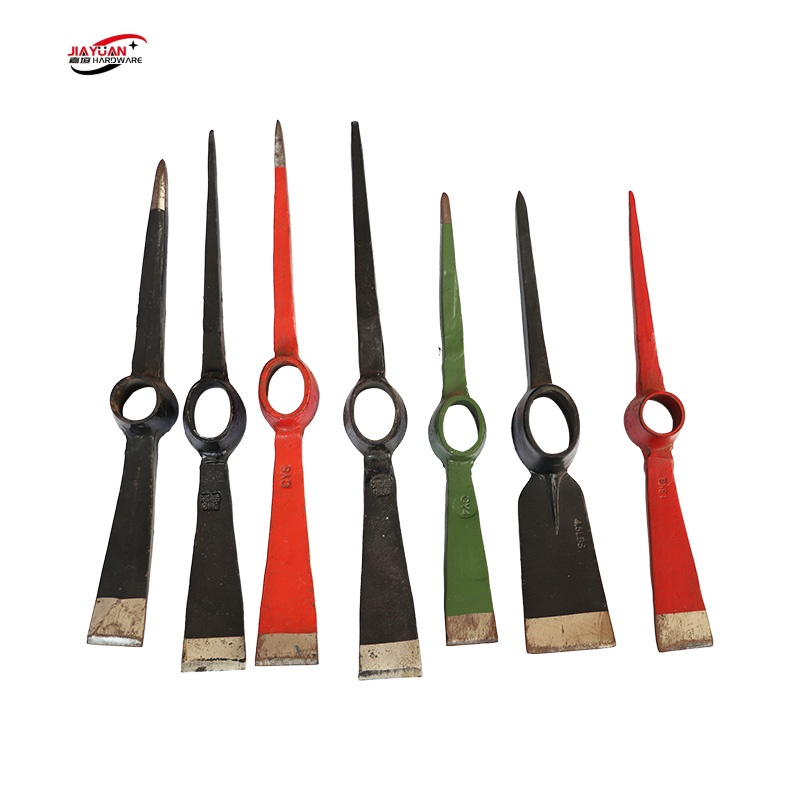
Understanding Pickaxe Design and Functionality
Anatomy of a pickaxe: How design influences performance
What makes a pickaxe work well really comes down to three main parts: the head, the handle, and how the weight is balanced throughout. Most heads have two sides - one end has a sharp point for breaking through tough stuff like rock or concrete, while the other side is flat for digging out loose material from cracks and crevices. When it comes to handles, longer ones between about 32 inches and 36 inches tend to give better power when swinging upwards, which is why many old school models used wood for this part. Some recent research into tool ergonomics found something interesting too. Angled grips apparently cut down on wrist pain by around 18 percent over regular straight handles according to a study published last year in Construction Tool Ergonomics Review. Makes sense actually since our wrists aren't built for straight line movements all day long.
Differences between traditional and modern pickaxe designs
Old school pickaxes had those solid forged steel heads attached to heavy hickory handles, but today's models are quite different. Modern tools come with precision cast alloy heads and lightweight composite fiberglass shafts that really hold up better. The newer designs last about 40% longer when digging through tough, gritty soils without wearing down as fast. Plus they weigh anywhere from 1.2 to almost 2 pounds less than traditional ones, which makes all the difference after hours on site. And here's something smart builders appreciate these days - most modern pickaxes have modular parts so workers can just replace the damaged section instead of tossing out the whole thing. This kind of design thinking helps cut down waste significantly across construction projects nationwide.
Material composition and durability in heavy-duty use
Most pickaxe heads still rely on high carbon steel with around 55 to 60 HRC hardness because it holds up pretty well against tough materials like granite and concrete without bending out of shape even when hit with forces over 7,500 Newtons. A few forward thinking companies have started experimenting with boron infused alloys lately though. According to some recent research published in the Materials Engineering Journal back in 2023, these new alloys chip at the edges about 30 percent less frequently after hundreds of strikes compared to traditional steel. As for the handles, we've come a long way from plain old untreated wood. Modern picks now feature polymer grips designed to absorb shocks better, which means they can take roughly triple the impact energy before finally breaking down completely during heavy duty work.
Breaking Rock and Hard Soil in Foundation and Excavation Work
Why Pickaxes Outperform Other Tools in Rocky and Compacted Soil Conditions
Pickaxes are really good at getting through tough rock layers because they focus all that force into one spot. According to a study done last year by the National Excavation Safety Council, those double-ended tools can push about 740 Newtons per square millimeter right at the pointy end. That's roughly 40 percent better than regular shovels when working on cracked limestone formations. For jobs where workers need to move specific amounts of material without shaking things up too much, pickaxes remain a top choice compared to big machines that tend to vibrate everything around them.
Role of Pickaxes in Trenching Through Dense Subsoil and Bedrock
When trenching through bedrock, pickaxes offer unmatched control. Their narrow blade splits sedimentary rock along natural fault lines, minimizing ground disturbance. For example, contractors saved 15% of project time using pickaxes over jackhammers during a Seattle residential sewer installation, especially in spaces under 4m² where powered tools were impractical.
Case Study: Clearing Bedrock for Residential Foundation Preparation
Builders working on a new housing complex just outside Colorado Springs ran into trouble when they hit 12 cubic meters of stubborn sandstone right where they wanted to lay the foundation. Instead of calling in heavy machinery, workers grabbed four pickaxes and got to work. To everyone's surprise, it took only 18 days to clear out that rock pile, which beat what the machines would have cost by about three weeks. According to the 2023 engineering report for the site, going old school actually saved around $14,700 on equipment rentals. Plus, the hand digging approach kept those big oak trees nearby from getting damaged since their roots weren't disturbed during the process.
Integration With Other Tools for Efficient Manual Excavation Workflows
Seasoned operators combine pickaxes with rock bars and trenching shovels in a three-stage process:
- Fracture bedrock with pickaxe strikes
- Lever fragmented sections using rock bars
- Remove debris with flat-edge shovels
This method increased productivity by 22% in Appalachian mountain construction projects compared to isolated tool use, according to recent equipment guidelines.
Demolition Applications: Removing Concrete and Paving with Precision
Effective techniques for chipping away concrete surfaces
Pickaxes with their two-headed setup work really well when taking down concrete in a controlled way. Most experienced workers find that hitting at around 45 degrees with the chisel part gives them the best results. Concrete just isn't strong against tension forces, something we all know since it breaks so easily compared to how much pressure it can take before cracking. When done right, this method makes nice clean cracks without sending tons of dust everywhere. That matters a lot in cities where silica dust from concrete is one of those big safety issues OSHA keeps talking about. The difference between these old school tools and modern rotary hammers is night and day. Those power tools shake like crazy, over 12.5 meters per second squared according to NIOSH from last year. But with regular pickaxes, the force stays focused exactly where needed. Contractors report seeing about 68 percent less damage spreading to nearby walls and floors during careful demolition jobs.
When to choose a pickaxe over jackhammers for small-scale demolition
According to the latest Construction Safety data from 2024, around 7 out of 10 contractors still reach for good old fashioned pickaxes when working on small jobs below 25 square feet. Why? No need for power cords or batteries, plus they can start digging right away without any fuss. Sure, those big jackhammers do tear through concrete about four times quicker, but all that extra speed comes at a cost. Setting them up takes anywhere between 18 to 32 minutes just for each individual job, which basically cancels out any time savings for quick fixes. Another major plus for pickaxes is safety factors. Workers who spend hours daily operating jackhammers often develop vibration white finger issues, something seen in nearly a quarter of regular users. Plus nobody wants to risk damaging underground pipes or cables while working in tight spaces where precision matters most.
Industry paradox: Manual precision vs. mechanical speed in paving removal
Even though demolition robots have made progress, many city paving crews are actually going back to old fashioned hand tools these days. The numbers tell an interesting story too – manual work has gone up around 41 percent since 2020 started. When it comes to waste, those big machines leave behind roughly between nine and fourteen percent of materials wasted, while good old fashioned pickaxes manage to keep waste down to just two to five percent when working on decorative stones. Some contractors we talked to mentioned that this careful approach saves them anywhere from eighteen to twenty-two dollars for every foot of road they fix in those historic neighborhoods where preserving original stones is absolutely critical for maintaining character.
Real-world example: Sidewalk repair project using pickaxes
A Seattle infrastructure upgrade demonstrated pickaxe efficiency: crews using modified pickaxes completed 1,200 sq.ft. of brick sidewalk repairs 30% faster than mechanical alternatives. The project avoided $4,800 in equipment rentals and reduced particulate emissions by 89% compared to standard demolition practices—key advantages as cities adopt ISO 14001 environmental standards for public works.
Landscaping and Terrain Shaping in Challenging Environments
Shaping Terrain and Removing Roots in Garden and Slope Construction
Pickaxes really shine in those tough spots where the soil has packed down tight or roots get all tangled together and machines just can't reach. The tip does a great job smashing through hard ground, and the flat part works wonders at prying loose rocks and cutting through roots as thick as three inches. This kind of fine control is why folks still grab a pickaxe when they need to grade backyard hillsides or tackle stubborn weeds growing around established trees. Most landscape designers these days want to leave as little footprint as possible on the land they're working with, and there's no better tool than a good old fashioned pickaxe for getting the job done right without wrecking the surrounding area.
Installing Retaining Walls in Sloped or Uneven Yards
When getting ready to build a retaining wall on uneven terrain, the first step usually involves clearing out anything below the surface that might get in the way. Think things like chunks of loose bedrock or those stubborn root systems left behind from previous plants. The pickaxe remains a workhorse tool here because it has that clever design where one side breaks through tough materials while the other can shape the ground exactly where needed for proper wall foundations. Going old school with hand tools instead of electric equipment means there's far less shaking going on around the worksite. This matters quite a bit when working near existing slopes since excessive vibrations could weaken their stability during construction.
Trend: Resurgence of Manual Tools in Remote and Environmentally Sensitive Sites
These days construction crews are reaching for pickaxes instead of heavy machinery when working in sensitive areas or out in the wilderness where there's no road access. Why? Well, pickaxes don't spew exhaust fumes and they sure don't make that loud rumbling noise that scares wildlife away. According to a recent study from GreenSite Builders last year, folks who used hand tools for digging in swampy areas actually saw about 40 percent less soil washing away than those relying on big machines. This change in approach fits right into new trends in landscape construction where builders create walls and barriers that hold back earth naturally rather than just paving over everything. The result? Landscapes that stay put through rainstorms and look better too.
Best Practices for Safe and Efficient Pickaxe Use in Construction
Proper handling and swing mechanics to prevent injury
Standing with feet about shoulder width apart and bending the knees just a bit helps keep things under control while putting less stress on the back. Hold onto the handle somewhere around the middle part for better grip strength, and remember to swing using the shoulders instead of relying solely on the elbows. Research from the National Institute for Occupational Safety back in 2023 showed that folks who use correct techniques cut down their risk of repetitive strain injuries by nearly half during digging tasks. Don't forget those gloves rated by ANSI standards they really do stop those annoying blisters. And safety glasses are a must have too since small pieces can fly off unexpectedly when working with tools.
Maintenance tips to extend the life of a pickaxe
Pick blades should get sharpened roughly every 40 to 50 hours of active work using a standard 10 inch mill bastard file for best results. The wooden handles need regular attention too - applying boiled linseed oil about once per season keeps them from drying out and splitting apart. Some folks swear by this method after seeing their own handles last anywhere between three to five extra years according to those USDA forest service tests back in the day. When it comes time to put these tools away, storing them upright in areas where temperature stays fairly stable helps keep rust at bay on all those metal parts.
Training protocols for new workers on pickaxe safety
Implement a 3-phase orientation:
- Classroom instruction on weight distribution principles
- Shadowing experienced operators for 15–20 hours
- Biomechanical assessment using wearable motion sensors to correct swing patterns
The Construction Safety Alliance emphasizes that monthly refreshers reduce improper tool usage by 67% compared to annual training alone. All protocols should align with OSHA 1926.1053 standards for hand tool safety.
Why Choose Jiayuan Steels for Pickaxes?
FAQ Section
What are the key components of a pickaxe?
A pickaxe mainly consists of three components: the head, the handle, and the weight distribution. Each part plays a crucial role in ensuring functionality and performance.
What materials are used in modern pickaxes?
Modern pickaxes employ precision cast alloy heads and lightweight composite fiberglass shafts for increased durability and performance compared to traditional steel heads and wooden handles.
How can pickaxes be used in excavation work?
Pickaxes are particularly effective in excavation work due to their ability to focus force into specific points, making them suitable for breaking hard rock layers and compacted soils.
Table of Contents
- Understanding Pickaxe Design and Functionality
- Breaking Rock and Hard Soil in Foundation and Excavation Work
- Demolition Applications: Removing Concrete and Paving with Precision
- Landscaping and Terrain Shaping in Challenging Environments
- Best Practices for Safe and Efficient Pickaxe Use in Construction
- Why Choose Jiayuan Steels for Pickaxes?
- FAQ Section