 EN
EN

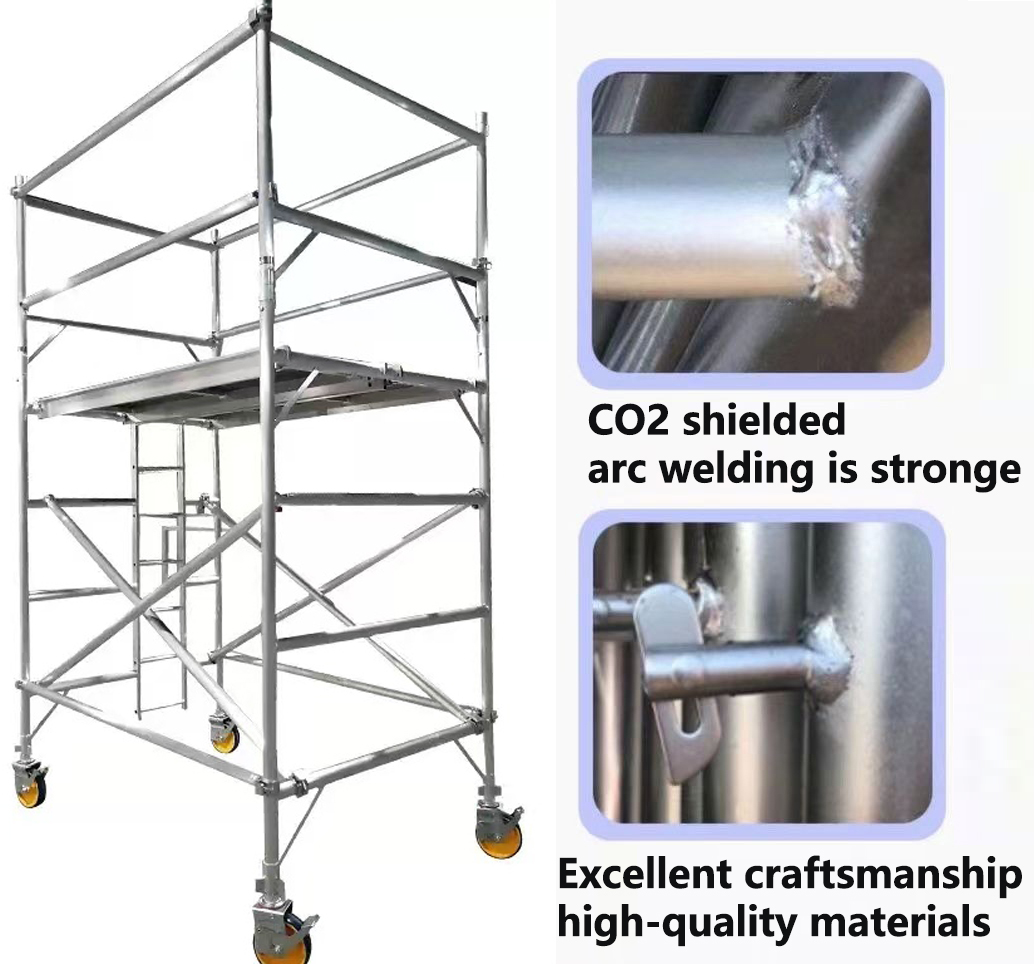
Modular Scaffolding Systems: Enabling On-Site Customization
Why Standard Scaffolding Falls Short on Complex Projects
Traditional tube and coupler scaffolding just doesn't cut it when dealing with weird building shapes, tight city spaces, or complicated architecture. The problem comes down to those fixed size parts which either need lots of on site welding or force engineers to make design changes to fit around curves, equipment in the way, or historic buildings where drilling holes isn't allowed. And this creates real problems for safety and keeps projects running late. According to the Bureau of Labor Statistics from last year, about two thirds of all OSHA violations related to scaffolding happen because workers have modified standard setups incorrectly. Meanwhile the Construction Productivity Report shows that sites typically lose around 17 working days due to these flexibility issues with conventional scaffolding systems.
How Modular Design—Ringlock, Cuplock, and Frame Systems—Support Component-Level Adaptability
Modern modular systems resolve these challenges through precision-engineered adaptability:
- Ringlock systems use rosette connectors enabling 360-degree node connections—ideal for radial configurations on domes or curved façades
- Cuplock platforms feature cup-jointed standards with horizontal ledger attachment points every 0.5m, supporting fine-grained vertical adjustments across tiers
- Modular frame variants integrate telescopic legs and interchangeable decks capable of adapting to slope gradients up to 15 degrees
This component-level flexibility allows crews to:
- Navigate around piping, machinery, or architectural protrusions without compromising structural integrity
- Maintain certified load capacities up to 8kN/m²—even in asymmetric or non-linear configurations
- Reduce assembly time by 40% compared to conventional systems (Scaffold Engineering Journal 2024)
Strategic hybridization further extends capability: combining Cuplock's robust vertical load-bearing capacity with Ringlock cantilevers for façade access demonstrates how modular scaffolding transforms site-specific constraints into engineered solutions.
Adapting Scaffolding to Real-World Site Constraints
Construction sites rarely conform to ideal conditions—steep slopes, buried utilities, and existing structures routinely challenge conventional scaffolding assumptions. Customizable, pre-engineered systems are no longer optional; they're essential for maintaining safety, compliance, and workflow continuity.
Overcoming Terrain Irregularities with Cantilever, Hop-Up, and Adjustable Base Plates
When the ground isn't level, things get tricky fast when it comes to keeping structures stable and accessible. Adjustable base plates can handle quite a bit actually, offering around 12 inches worth of vertical adjustment. This really matters on those sloped areas where the earth keeps shifting over time. For spots where there's a sudden change in height, we've got these hop-up brackets that let platforms transition between levels while still maintaining proper structural integrity and continuous guardrails all around. Cantilever extensions work great too because they attach firmly to solid parts of buildings or other structures, so they basically ignore all that messy ground below them whether it's mud pits or jagged rocks sticking up everywhere. Especially important stuff happens on hillsides and near waterways where conditions are so unpredictable. Before putting any of this together though, getting proper soil tests done makes sense along with having engineers check off all the weight calculations. Nobody wants their whole setup sinking down or moving sideways once people start walking across it or equipment gets loaded onto it later on.
Integrating Around Obstacles: Cladding, Utilities, and Existing Structures
When dealing with permanent site features, proper integration matters a lot rather than trying quick fixes. Offset frames help clear space around fancy cladding or old stone walls while still allowing people to move freely up and down. For bridge decks spanning over pipes, wires, or air ducts, these structures distribute weight properly so they don't damage delicate parts underneath. At building corners or maintenance areas, we often see angled platforms and smaller sections that keep workers reaching those important spots. But there's one catch worth mentioning here: the guardrails need to stay connected properly, weights spread out correctly, and everything must hold firm against sideways forces. Extra care becomes necessary when working close to electrical lines hanging overhead or next to precious historical buildings. Even small twisting motions in these situations might cause serious problems down the road if not handled right from the start.
Engineering Oversight and Compliance in Custom Scaffolding Applications
Proprietary Systems and Their Role in High-Precision Façade Access
Top proprietary scaffolding setups use components that have already passed certification tests and lock together in ways that ensure consistent weight distribution and reliable results every time they're used. What makes these systems stand out is how modular they are. They can be arranged in all sorts of shapes, fit around plumbing and electrical work, and even adapt to specific building exteriors without compromising safety standards. The connections between parts matter a lot too. Things like forged metal connectors or joints tested under real stress conditions stop pieces from coming loose when workers are doing tricky jobs such as scrubbing stone surfaces or installing heavy machinery. Independent testing usually goes beyond what's required by ANSI/ASSE A10.8 guidelines. This extra scrutiny proves these systems stay stable even when loads aren't perfectly balanced or when forces come from unexpected directions. That's why professionals turn to them for precision work where regular scaffolding just doesn't cut it.
The Critical Line: When Field Modifications Violate Design Intent—and Why OSHA Compliance Isn’t Enough
OSHA compliance ensures baseline hazard mitigation—but it does not guarantee structural fidelity when field alterations deviate from engineering intent. Unapproved welds, removed bracing, or improvised platform extensions disrupt verified load pathways, increasing collapse risk by 300% (2023 Scaffold Incident Analysis). Critically:
- OSHA standards address general workplace hazards—not system-specific design limits or material tolerances
- 18% of scaffold-related fatalities occurred on structures that passed OSHA inspection but violated manufacturer-specified configurations
Material substitutions (e.g., wooden planks on metal brackets) or unauthorized height increases introduce undetected torsional stresses that static inspections cannot identify. Engineering sign-off is mandatory—not advisory—whenever proprietary systems are adapted to unique structural interfaces, altered geometry, or atypical loading scenarios.
FAQ
What makes modular scaffolding systems better than traditional scaffolding?
Modular scaffolding offers adaptability, allowing for custom configurations, improved safety, and reduced assembly time compared to traditional scaffolding.
How do modular systems handle uneven terrain?
Adjustable base plates and hop-up brackets allow for vertical adjustments, providing stability on uneven terrain.
Are modular scaffolding systems compliant with OSHA standards?
While they meet OSHA standards, additional engineering oversight is needed to ensure full structural integrity, especially if modifications are made.