 EN
EN

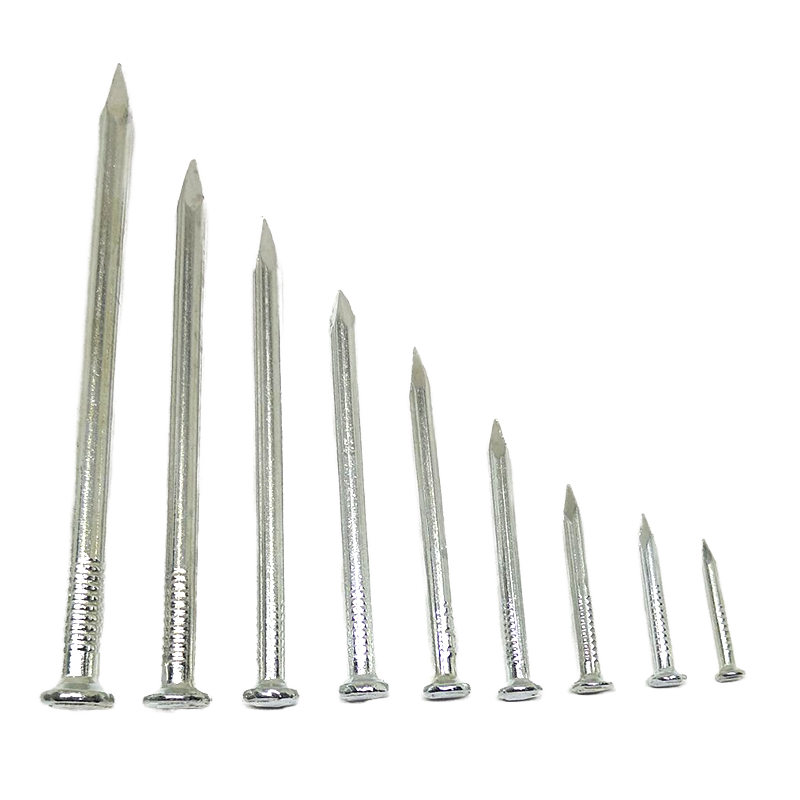
Selecting the Optimal Material for Concrete Nails
Carbon Steel vs. Stainless Steel: Corrosion Resistance and Tensile Strength Trade-Offs
Carbon steel nails offer impressive tensile strength ranging from about 900 to 1200 MPa and come at a much lower price point compared to alternatives. However these nails need protection against rust so they're typically coated with zinc. Stainless steel options naturally fight off corrosion thanks to their minimum 10.5% chromium content. The tradeoff here though is that stainless steel gives up around 15% in tensile strength and costs anywhere between 35 and 50% more than regular carbon steel. When it comes down to choosing between them, environment matters most. Coated carbon steel works just fine inside buildings where humidity stays under control. But if the project involves areas exposed to moisture, salt air, or coastal conditions, then stainless steel becomes necessary, particularly grades like 316 or 316L which handle harsher environments better. For vertical structures that bear weight, checking compliance with standards like ASTM A641 for zinc coated wire or ASTM A153 for hot dip galvanized products makes sense. Not every situation requires this level of scrutiny, but definitely important when the coating condition could impact critical connections where failure isn't an option.
Environmental Matching Strategy: Moisture, Chlorides, and Coastal Exposure Guidelines
Ignoring site-specific corrosion drivers accelerates fastener degradation by up to 300%. Match material selection to verified environmental risk using this evidence-based protocol:
| Environmental Factor | Risk Threshold | Material Recommendation | Verification Standard |
|---|---|---|---|
| Humidity >60% RH | Moderate | Hot-dip galvanized carbon steel | ASTM A123 |
| Chloride presence | Severe | 316 Stainless Steel | ASTM F880 |
| Coastal exposure | Critical | 316L Stainless Steel | NACE TM0169 |
In tidal zones or near de-icing salt, 316L’s molybdenum content provides superior resistance to pitting corrosion where standard galvanized coatings often fail within 18 months. Always align selections with local atmospheric corrosivity categories defined in ISO 9223, especially for bridges, seawalls, and other long-life infrastructure.
Sizing Concrete Nails Precisely for Structural Integrity
Length and Diameter Selection Based on Substrate Density and Load Path Requirements
When choosing nail sizes for concrete work, builders need to consider two main factors: the density of the concrete itself and how weight gets distributed across the entire structure. For really tough concrete rated above 3,000 psi, nails at least 4 mm in diameter won't bend when driven in place. But with softer materials, smaller gauge nails still hold strong enough without sacrificing grip. Embedding depth matters too. A good rule of thumb is to drive the nail at least 1.5 times deeper than the material being fastened. This helps prevent pull-out failures, which becomes especially important in earthquake-prone areas. Studies from the Structural Engineering Institute show buildings with undersized fasteners face a 40% higher risk of structural failure during seismic events. What gets prioritized ultimately comes down to what the structure needs to do and withstand.
| Application | Diameter Priority | Length Priority |
|---|---|---|
| Shear transfer walls | High (force distribution) | Moderate |
| Tensile connections | Moderate | High (embedment depth) |
| Dynamic load points | Critical (fatigue resistance) | Critical |
Avoiding Common Sizing Errors in High-Rise and Retrofit Applications
High-rise facade systems demand wind uplift calculations neglecting them is a leading cause of anchorage failure above 20 stories. In retrofit work, use nails 20–30% longer than standard to compensate for micro-fractures and reduced substrate integrity. Frequent oversights include:
- Applying uniform nail dimensions across variable concrete densities
- Overlooking combined shear + tension demands at corner joints
- Ignoring thermal expansion gaps at steel-concrete interfaces
Mitigate these by conducting core sampling and digital load-path simulations before finalizing specifications ensuring installation readiness and performance predictability.
Validating Load-Bearing Capacity and Hardness of Custom Concrete Nails
ASTM F1667 Compliance: Testing Yield Strength, Rockwell Hardness, and Dynamic Load Performance
ASTM F1667 defines the minimum validation required for custom concrete nails used in structural applications. Its three core tests ensure functional reliability under real-world stresses:
- Yield strength testing (per ASTM E8) quantifies resistance to permanent deformation under tension critical because insufficient tensile capacity contributes to 23% of anchor failures in concrete applications
- Rockwell C-scale hardness must fall between HRC 47–53 to balance penetration capability with shank durability outside this range, nails risk brittle fracture or excessive deformation during installation
- Dynamic load performance, assessed via ASTM D1761 impact testing, validates stability under vibration and seismic forces with pass thresholds calibrated to regional seismic zone classifications
| Performance Metric | Test Method | Compliance Threshold | Failure Risk if Unmet |
|---|---|---|---|
| Yield Strength | ASTM E8 Tensile Test | ≥ 100 ksi | Anchor pullout under sustained load |
| Hardness | Rockwell C Scale | HRC 47–53 | Shank buckling or tip chipping during driving |
| Dynamic Load | ASTM D1761 Impact Test | <3 mm displacement at 50 J impact | Progressive loosening in high-vibration environments |
Balancing Specification Rigor with Cost-Efficiency in Procurement
ASTM F1667 full validation simply cannot be skipped when dealing with seismic zones, major infrastructure projects, or any situation where consequences are severe. The extra cost around 18% for these certified materials actually stops those terrible anchorage failures from happening. When looking at things like interior walls between rooms or just regular exterior cladding that doesn't bear much weight, we can get away with checking just two things yield strength and hardness. This covers about 90% of what needs to be known without going through all the hassle of complete certification. Match up the testing with how important safety really is for each specific project. Go all out on the tests for parts that could endanger lives if they fail, but keep it simple when the worst case scenario isn't so bad. This method keeps everything technically sound while still making sense financially across different types of construction projects.
Partnering with OEM/ODM Manufacturers for Scalable Concrete Nail Customization
From CAD Design to Production: Digital Workflows for Project-Specific Concrete Nails
Working closely with original equipment manufacturers and original design manufacturers allows companies to customize products accurately and scale production efficiently using digital workflows throughout the process. The whole thing starts with computer aided design models where engineers run simulations on how loads distribute, what happens when exposed to corrosion, and how materials interact with their environment before making any physical prototypes. This approach cuts down on wasted materials by about 18%, according to industry standards. These digital connections help ensure that fasteners meet strict size requirements, proper metal composition, and performance standards needed for tough jobs such as retrofitting boats or reinforcing buildings against earthquakes. Top manufacturers use computer numerical control machines to maintain very tight tolerances around plus or minus 0.05 millimeters during manufacturing. This lets them handle everything from small test batches all the way up to mass production runs on adaptable factory lines that can be changed as needed.
Branded, Spec-Compliant Solutions for Smart City and Infrastructure Projects
When companies work together through OEM/ODM arrangements, they actually build brand identity and all the necessary compliance paperwork right into the manufacturing process itself. This means each production run automatically satisfies those tricky ASTM F1667 standards and still includes those unique project markers that clients need. The timing works out pretty well too since production calendars line up with what cities are planning for their infrastructure projects like bridge repairs, tunnel expansions, and smart traffic system upgrades. Nobody wants to deal with those annoying delays caused when specs don't match up or products need re-certification. Speaking of quality control, modern systems track everything digitally as it happens on the factory floor. They check things like Rockwell hardness levels between C45 and C60, plus measure how strong materials hold up under shear stress. These numbers really matter for places where vibrations are constant, think about those steel structures holding up train tracks above ground or supporting traffic lights overhead. By keeping things standardized and fully traceable throughout city renewal projects, this approach helps avoid what studies show is about one quarter of all anchoring problems that happen because specifications get lost somewhere along the way during construction work.
Integrating Engineering Consultation Early in Concrete Nail Procurement
Bringing in structural and materials engineers right at the beginning of project planning rather than waiting until specs are already written can save money on expensive redesigns later on, avoid problems with field work, and stop issues like fasteners failing too soon. When we talk to these experts early, they spot specific risks related to the actual conditions of each project site. Think about things like how buildings react to earthquakes, when different parts of a structure move differently over time, or special situations such as working with pre-stressed concrete or dealing with salty air near coastal areas. What they find helps us make better choices about which metals to use, what level of hardness is needed, and how best to protect against rust. We check all these decisions using computer models called finite element analysis and tests that follow standards like ASTM F1667. According to research published in Construction Materials Journal last year, getting this kind of technical review upfront cuts down on fixing problems after the fact by around 22%. The bottom line? Working together to set clear performance goals changes something simple like picking nails into a much more valuable collaboration between engineers and contractors. This approach speeds up approval processes and actually makes buildings stronger and more durable in the long run.
FAQ Section
What are the main materials used for concrete nails and their benefits?
Concrete nails are primarily made from carbon steel and stainless steel. Carbon steel offers high tensile strength and a lower price but requires zinc coating to prevent rust. Stainless steel resists corrosion effectively, particularly in corrosive environments, and is suitable for projects exposed to moisture or salt air.
How does environmental exposure affect the choice of nail material?
Environmental factors such as humidity, chloride presence, and coastal exposure dictate the choice of nail material. For instance, hot-dip galvanized carbon steel is suitable for moderate humidity, while 316 or 316L stainless steel is recommended for severe chloride presence or critical coastal exposure.
Why is the sizing of concrete nails important?
Sizing affects the structural integrity of projects. The density of concrete and load path requirements determine the appropriate length and diameter of nails to prevent pull-out failures and withstand dynamic loads, especially in earthquake-prone areas.
What tests validate the performance of concrete nails?
Performance tests include yield strength testing (ASTM E8), Rockwell C-scale hardness, and dynamic load performance (ASTM D1761). These tests ensure concrete nails meet criteria for tensile strength, hardness, and stability under stress.
Why involve engineers early in the procurement process?
Early involvement of engineers allows for identifying site-specific risks and reduces redesign costs. Engineers' insights on environmental conditions and material characteristics help make informed decisions, enhancing project durability and safety.
Table of Contents
- Selecting the Optimal Material for Concrete Nails
- Sizing Concrete Nails Precisely for Structural Integrity
- Validating Load-Bearing Capacity and Hardness of Custom Concrete Nails
- Partnering with OEM/ODM Manufacturers for Scalable Concrete Nail Customization
- Integrating Engineering Consultation Early in Concrete Nail Procurement
- FAQ Section